

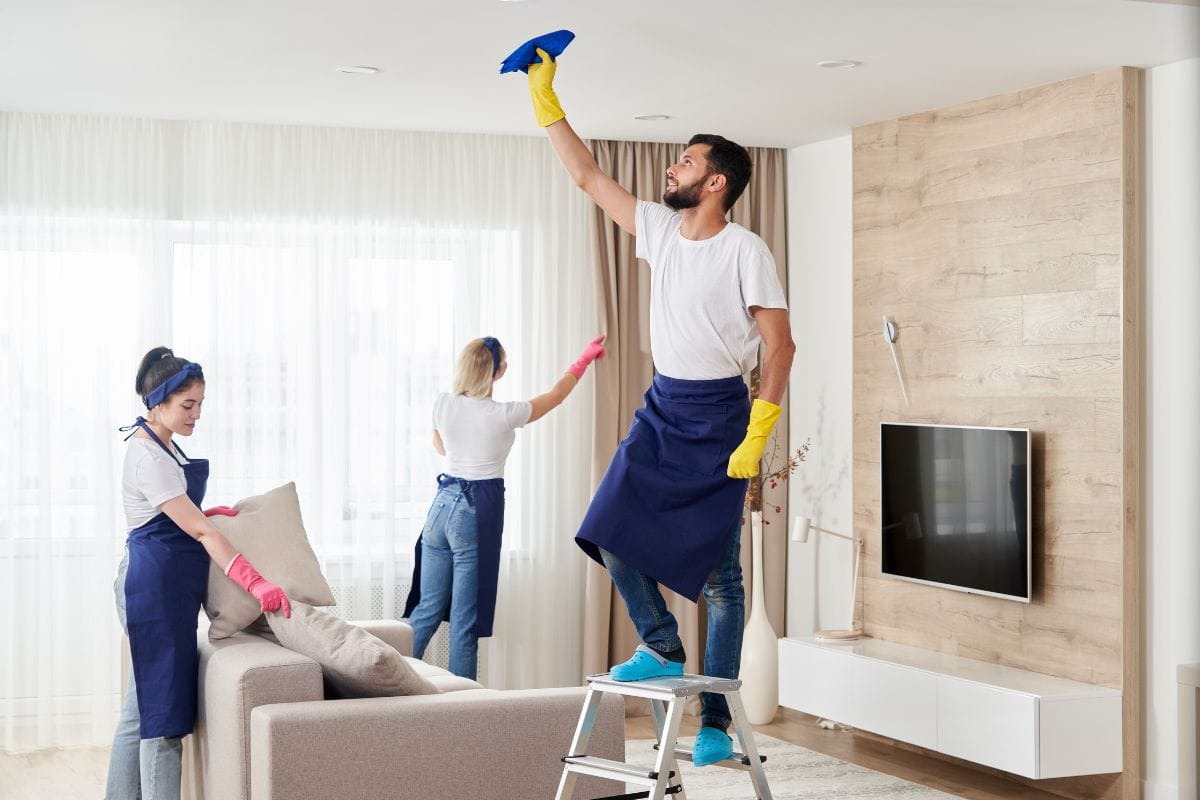
A clean environment does more than look good—it actively supports health, focus, and well-being. Yet, despite widespread awareness of the benefits of cleanliness, a significant portion of households and small businesses continue to rely on irregular, do-it-yourself cleaning routines that leave critical areas unaddressed. According to a survey conducted by the American Cleaning Institute, nearly 1 in 3 Americans admits they are not satisfied with the cleanliness of their own home—even after cleaning it themselves.
The gap between effort and outcome is where professional cleaning services prove their value. This article explores the benefits that most people never consider when evaluating professional cleaning—from cognitive clarity and reduced stress to measurable gains in workplace productivity.
Why Most Self-Cleaning Routines Fall Short
Inconsistency Is the Biggest Barrier to a Truly Clean Space
The most common failure in self-managed cleaning is inconsistency. A thorough clean one week followed by a rushed wipe-down the next creates an uneven baseline of hygiene. Bacteria, allergens, and mold don’t operate on convenient schedules—they accumulate continuously, particularly in kitchens, bathrooms, and soft furnishings.
Professional cleaning operates on a fixed schedule, removing the dependency on personal motivation. Routine visits ensure that even the areas most prone to accumulation—behind toilet bases, under kitchen appliances, inside window tracks—are addressed regularly.
Product Selection Errors That Reduce Cleaning Effectiveness
Most households rely on a small collection of general-purpose cleaning products. While these serve basic maintenance needs, they are rarely the most effective solution for specific materials and surfaces. Using the wrong cleaning agent on natural stone, hardwood, or stainless steel can cause permanent damage over time.
Professional cleaners are trained in surface-specific product selection. They understand pH levels, material sensitivities, and how to achieve a deep clean without degrading surfaces—knowledge that protects both hygiene standards and the long-term condition of your home.
The Psychological Impact of a Clean Environment
How Clutter and Dirt Affect Mental Health and Focus
The relationship between physical environment and mental state is well-documented. A 2010 study published in Personality and Social Psychology Bulletin found that women who described their homes as “cluttered” or “full of unfinished projects” showed elevated cortisol levels—a primary stress hormone—compared to those who described their homes as “restful” or “restorative.”
This research aligns with broader findings in environmental psychology: disorganized, unclean spaces compete for cognitive attention even when individuals aren’t actively looking at them. A professionally maintained space removes this background stressor, contributing to improved focus, reduced anxiety, and a stronger sense of control.
The Connection Between Clean Workspaces and Employee Productivity
For businesses and home-office workers, cleanliness has a direct line to productivity. A study by the University of Exeter found that employees in well-organized, clean environments were 15% more productive than those working in cluttered spaces.
Office surfaces—keyboards, desk phones, shared equipment—are among the most bacteria-laden objects in any environment. Research from the University of Arizona found that the average office desk harbors 400 times more bacteria than a toilet seat. Regular professional cleaning of workspaces reduces absenteeism, improves air quality, and creates an environment where employees can focus without the distraction of disorder.
Specialized Cleaning That Standard Routines Miss
Deep Cleaning for Carpets, Upholstery, and Flooring
Carpets and upholstered furniture act as large-scale filters, trapping dust, pet dander, food particles, and biological waste over time. Standard vacuuming removes surface-level debris but leaves embedded particles untouched. According to the Carpet and Rug Institute, professional hot water extraction—commonly known as steam cleaning—removes up to 98% of dirt and allergens from carpet fibers.
Left unaddressed, this accumulation contributes to poor indoor air quality, accelerated carpet wear, and persistent odors. Professional deep cleaning of soft surfaces should be completed at least twice a year to maintain both hygiene and appearance.
Kitchen and Bathroom Sanitization at a Clinical Level
Kitchens and bathrooms carry the highest bacterial load of any rooms in the home. The kitchen sink, cutting boards, and refrigerator handles consistently rank among the most contaminated surfaces in residential environments, according to NSF International’s annual Household Germ Study.
Professional cleaning services apply hospital-grade disinfectants to high-contact surfaces, target mold growth around grout and caulking, and address areas that standard cleaning routines routinely miss—behind the toilet, inside refrigerator door seals, and beneath stovetop burners. The cumulative effect of this level of thoroughness is a measurably safer food preparation and hygiene environment.
Time Reclaimed: What You Do With the Hours You Get Back
The Measurable Value of Delegating Household Tasks
According to the Bureau of Labor Statistics’ American Time Use Survey, Americans spend an average of 2.3 hours per day on household activities, with cleaning representing a significant proportion of that time. For dual-income households, the compounded opportunity cost of self-managed cleaning is substantial.
Delegating cleaning tasks to professionals doesn’t just save hours—it restores energy. Physical cleaning is demanding work. The fatigue generated by a Saturday morning deep-clean can reduce the quality of the rest of the weekend, affecting personal relationships, recreational activities, and rest. When that labor is handled by professionals, the reclaimed time is genuinely restorative.
How Families Benefit From Reclaimed Weekend Hours
Weekends are often the only time families have to spend time together without the structure of school or work schedules. When that time is consumed by chores, the opportunity for meaningful family activity shrinks. A 2019 study published in Social Psychological and Personality Science found that buying time—specifically paying for services to reclaim leisure hours—was more strongly correlated with life satisfaction than material purchases of comparable cost.
Investing in professional cleaning services isn’t a luxury reserved for high earners. For families managing two incomes, young children, or aging household members, it’s a practical tool for protecting the quality of personal time.
Eco-Friendly Cleaning: A Growing Standard in the Industry
Why Green Cleaning Matters for Health and the Environment
A significant shift has occurred across the professional cleaning industry over the past decade. Many companies now offer environmentally responsible cleaning options—using biodegradable products, microfiber technology, and reduced-water cleaning methods that minimize environmental impact without sacrificing effectiveness.
The Environmental Working Group has flagged dozens of conventional cleaning products for containing compounds linked to respiratory irritation, hormone disruption, and skin sensitization. Green cleaning alternatives eliminate these concerns, making professional cleaning not only more convenient but actively healthier for occupants—particularly children and those with existing health conditions.
How to Ask the Right Questions When Hiring a Cleaning Service
Before engaging a professional cleaning company, it’s worth asking a few targeted questions:
What disinfectants do you use, and are they EPA-approved?
Do you offer fragrance-free or allergen-sensitive options?
Are your team members background-checked and insured?
How do you handle special requests or areas that need extra attention?
What is your rescheduling and satisfaction policy?
Companies that answer these questions clearly and confidently are demonstrating the kind of professionalism that separates reliable providers from those that cut corners.
A Cleaner Space Is a Better Investment Than Most People Realize
The full value of professional cleaning extends well beyond a spotless kitchen counter. It shows up in reduced sick days, lower stress levels, protected property value, and the simple pleasure of coming home to a space that’s been thoroughly cared for.
For individuals and families juggling the demands of modern life, the real question is never whether cleanliness matters. It’s whether the time, energy, and expertise required to achieve it are better directed elsewhere. For the vast majority of households and businesses, the evidence suggests they are.